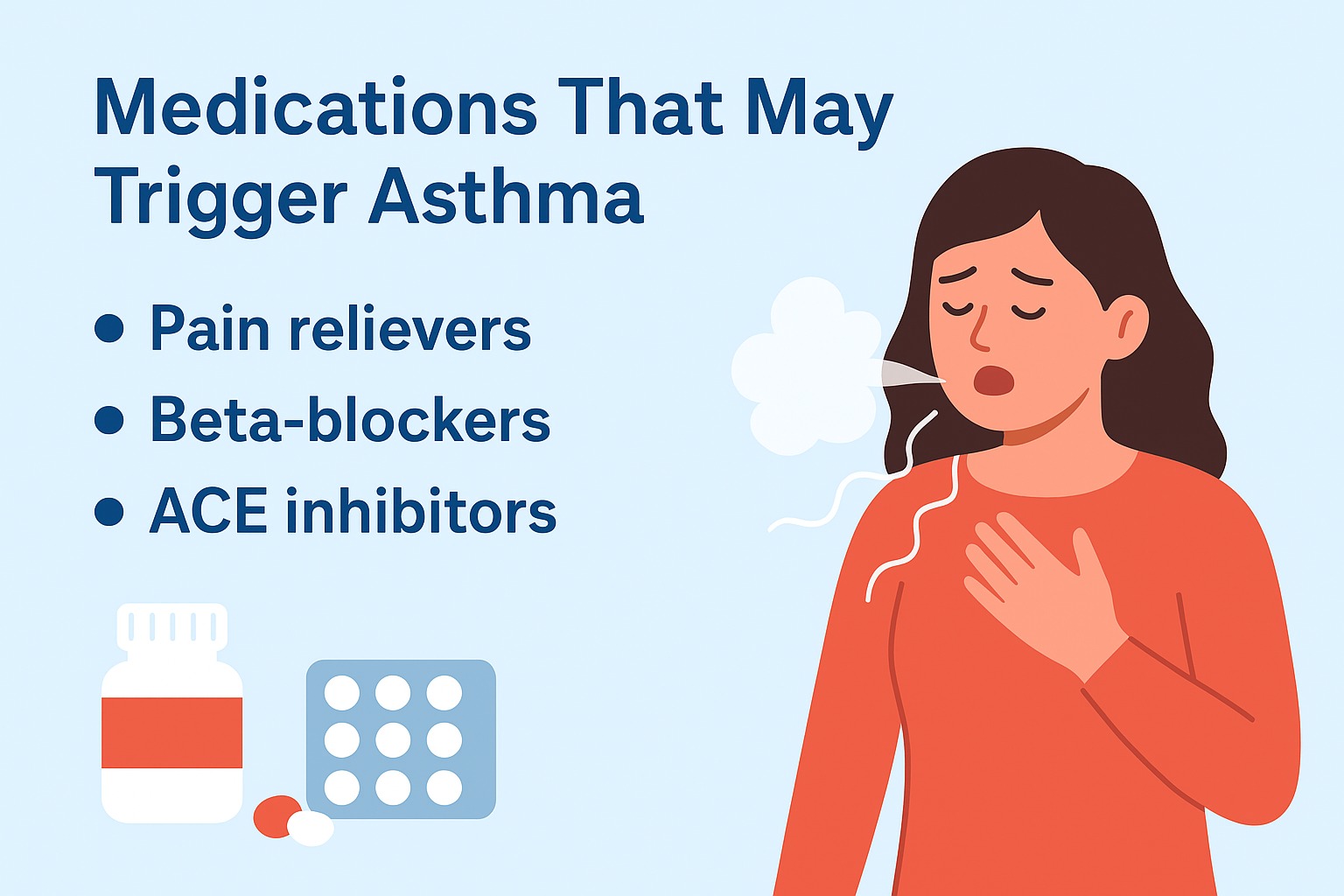
Medications That May Trigger Asthma: What You Need to Know
Published : 03 Sep 2025Asthma is a chronic condition that makes the airways swell and narrowing in the lungs, causing symptoms such as wheezing, cough, chest stiffness and shortness of breath. While allergies, infections, and environmental factors are usually triggers, which do not feel that some drugs can also set or make them worse.
For someone with asthma, it is necessary to know about the trigger related to these drugs. This does not mean that you need to avoid every drug mentioned, rather that you should use them carefully and always consult your healthcare provider before taking new drugs.
Pain relieving and fever reducers: a common concern
Many people turn to over-the-counter pain reliever in case of headache, muscle pain or fever. However, for people with asthma, some of these drugs-especially nonsteroidal anti-inflammatory drugs (NSAID) can be problematic.
NSAIDs include:
- Aspirin
- Ibuprofen (Advil, Motrin)
- Naproxen (Aleve)
- Ketoprofen
For sensitive individuals, these drugs may cause asthma flare-ups such as coughing, wheezing, or chest tightness. In some cases, they can also cause skin reactions like hives or swelling around the face and eyes. The reaction isn’t the same for everyone some asthmatics can tolerate these medicines, but for others, they can be dangerous.
Understanding the trinity of the canter
Known as the tride of the smeter (also known as aspirin-appropriate respiratory disease). This is when three medical issues are together:
- Asthma
- Sensitivity to aspirin or other NSAID
- Nasal polyps (increase inside nose or sinus)
People with this situation often experience:
- Old nose crowd
- Nose and Postansal drip
- Frequent sinus infections
- Wheezing and cough
- Shortness of breath after taking aspirin or NSAID
If you suspect that you may have this situation, it is very important to tell your doctor. Alternative remedies are available for pain and fever that are not at risk in your breathing.
Safe option for pain management
If Nsaids are a trigger for you, what can you take instead?
- Acetaminophen (paracetamol): Often considered a safe option, but in some cases, even this drug can spoil the symptoms of asthma. It usually depends on dosage and personal sensitivity.
- Parent pain relievers: In cases of chronic or severe pain, some intoxicating drugs may be prescribed. These usually do not trigger asthma, but they can cause slow breathing if taken during a severe asthma attack - so they should be carefully and only under medical supervision.
If you have asthma, Read the drug label, avoid self-medication, avoid self-medication, and talk to your doctor before using any pain reliever.
Non-Medical Pain Relief Options
Sometimes the best pain management comes from a pill. Non-medication treatment can help relieve discomfort without the risk of deteriorating asthma symptoms. Examples include:
- Cold Therapy (ice pack): aids for recent injuries such as sprain or inflammation.
Heat therapy (heating pads, hot towels): useful for chronic issues such as muscle stiffness or chronic injuries. - Exercise and stretching: Activities such as yoga or mild physical activity can improve flexibility, circulation and reduce pain.
- Acupuncture and massage: These treatment can promote relaxation and reduce chronic discomfort in some people.
Searching for these options may reduce the need for persistent pain medicine, which may reduce the chances of provoking the drug-trigger asthma.
Other medicines that may affect asthma
While the painkillers are the most famous criminals, other types of drugs can also affect the symptoms of asthma.
Beta-blockers
These drugs are usually prescribed for heart condition, hypertension, migraine and even anxiety. Unfortunately, they can narrow the airways and trigger asthma attacks in some patients.
- Non-selective beta-blockers (eg propranolol) are more likely to cause problems.
- Selective beta-blockers can be better tolerated but still require caution.
If your doctor determines these, they can start with a small dose to monitor your response.
ACE Inhibitors
Ace inhibitors (eg lisinopril or anlapil) are used to treat high blood pressure and heart conditions. A common side effect of these drugs is a persistent dry cough. This can be misleading because it can be masked or overlap with asthma symptoms, which makes it difficult to explain whether your breathing issues are caused by drug or asthma.
Other Possible Triggers
- Some eye drops used for glaucoma may contain beta-blockers.
- Certain antibiotics and anesthesia drugs have been reported to cause issues in rare cases.
For this reason, always inform every healthcare provider including dentists, surgeons, and eye doctors about your asthma before starting a new treatment.
Communicating With Your Healthcare Provider
Managing asthma effectively means that you create a strong partnership with your healthcare team. Here are some steps to protect yourself:
- Keep a list of drugs that you know trigger your asthma.
- Whenever you take a new medicine, take an emergency inhaler, just in the case.
- Ask about options. Most medicines that spoil asthma have subcutations that are safe.
- Monitor your symptoms after starting any new medicine. If you are seeing that there is an increase in cough, wheezing, or shortness of breath, contact your doctor immediately.
Living Safely with Asthma
- Having asthma does not mean that you cannot take medicines for other health conditions. This requires just a little extra precaution. Knowing which drugs can cause problems and can be active about discussing their situation with doctors, you can reduce the risk of provoking.
- Regular exercises such as healthy lifestyle options, maintaining balanced diets, being hydrated, and avoiding smoking also play a major role in keeping asthma under control.
Final Thoughts
Asthma is a condition that requires focus, and drug sensitivity can complicate management. The most common drug-related triggers such as Aspirin, Ibuprofen, NeProckson and other NSAIDs are the most common drug-related triggers, especially for people with trident of saters. Other drugs, such as beta-blockers and ACE inhibitors, can also affect asthma in some individuals.
The good news is that there are safe options-like acetaminophen, non-drag therapy, and doctor-analogy options-which can help you manage pain and other health concerns without deteriorating asthma.
The key is awareness, communication and careful monitoring. By working and working with your healthcare provider, you can safely manage both your asthma and other health conditions without compromising on the quality of your life.
Category:
Tags: